

















Does PPF stop pinstriping off-road? An honest answer
Yes, on most trails. Paint protection film (PPF) stops pinstriping because the film takes the scratch instead of your paint, and light marks on self-healing film fade with a bit of warmth. It isn't magic: very tight, overgrown trails can still mark the film, but then you replace one panel instead of repainting a door.
- Branches scratch the film, not your clear coat
- Fine marks heal with sun or warm water
- Worst case, you replace one panel, not a paint job
What is pinstriping?
Pinstriping is the fine scratches that branches and brush leave when they drag along your rig. They cut into the clear coat, the thin top layer of your paint. One trail adds a few. A season of tight trails can cover a whole side. Light pinstripes polish out; deeper ones mean paint work. Also known as Bc pinstripes for the locals.
How PPF stops pinstriping
PPF is a tough urethane film that sits on top of your paint. When a branch drags along the side, it scratches the film, not the clear coat. That's the whole idea: the film is a sacrificial layer.
Our kits use 3M film, about 7.5 mil thick for gloss and about 7.9 mil for matte. The top layer is self-healing,(in fact on of the best in its category) so fine marks close up with heat from a sunny day or warm water.
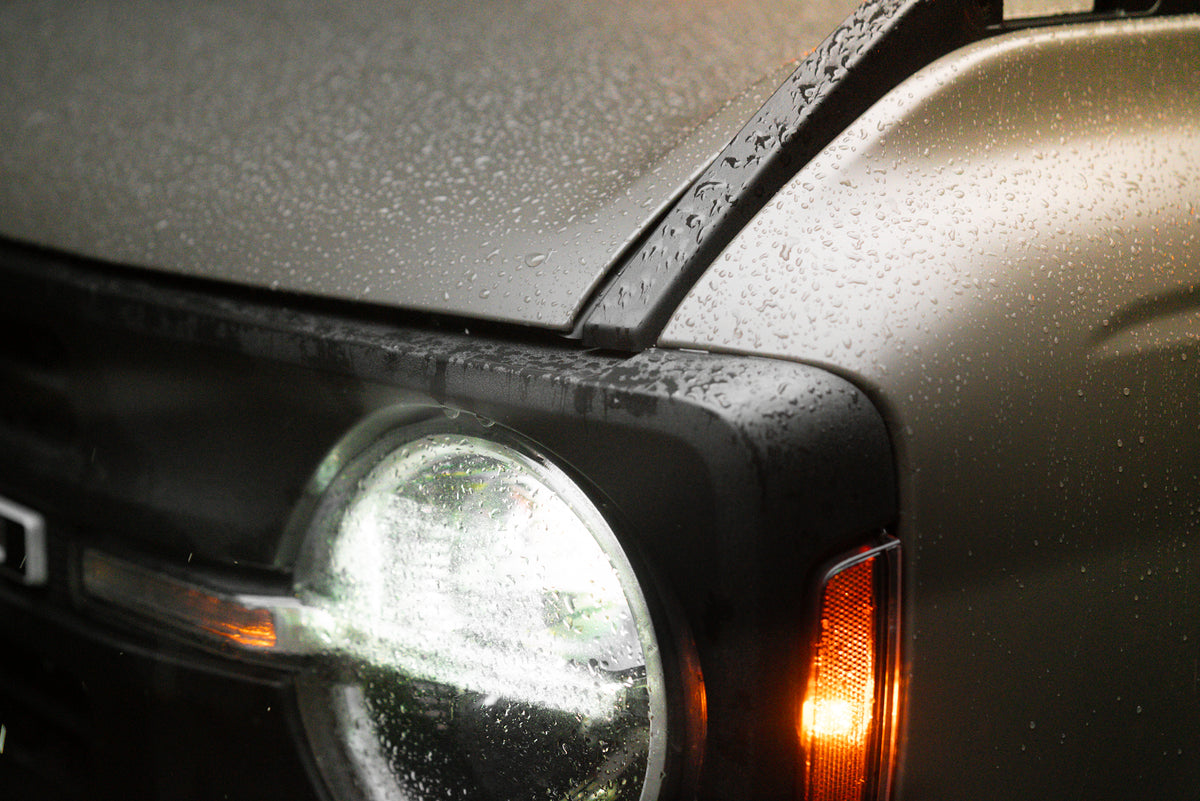
What happened on an overgrown trail
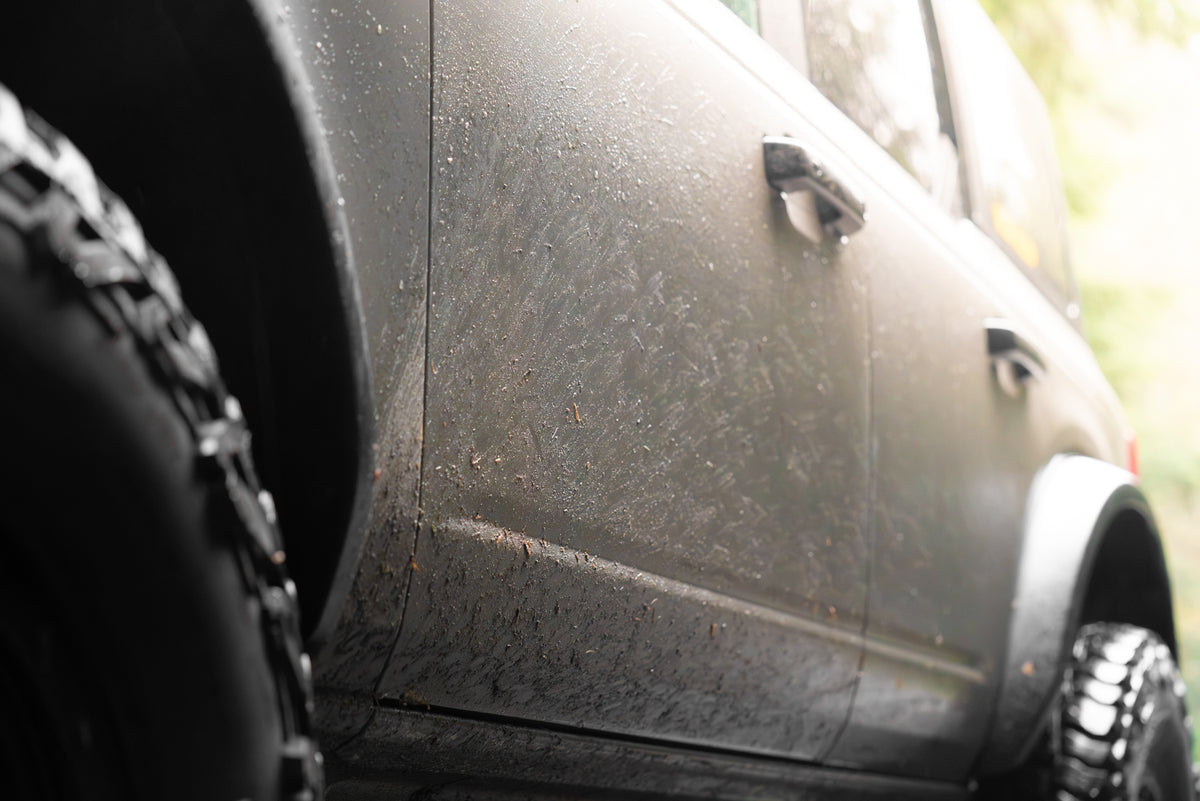
I took my matte-wrapped Bronco down a local overgrown trail, the kind where branches drag along both sides the whole way and push mud across the panels. After a wash, there wasn't a single mark on the film.
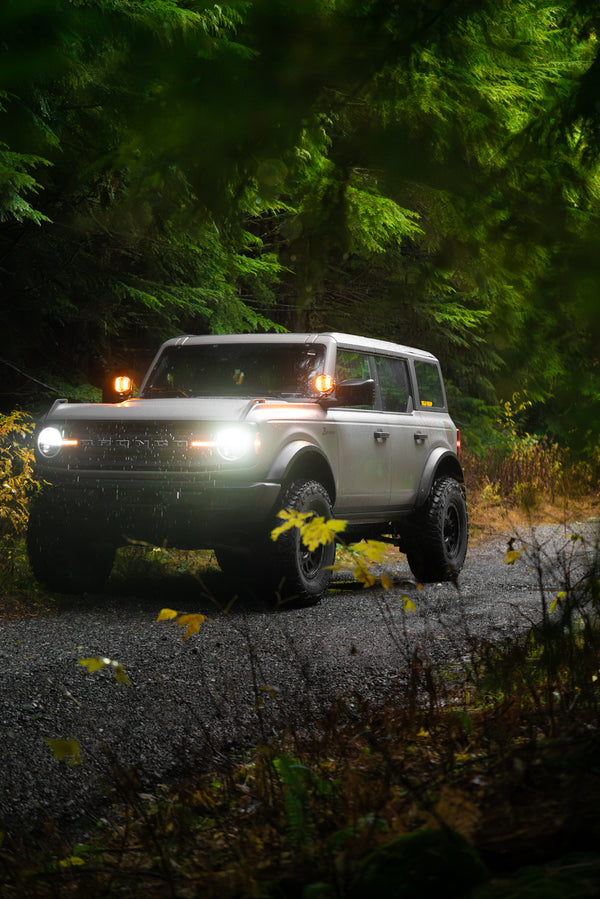
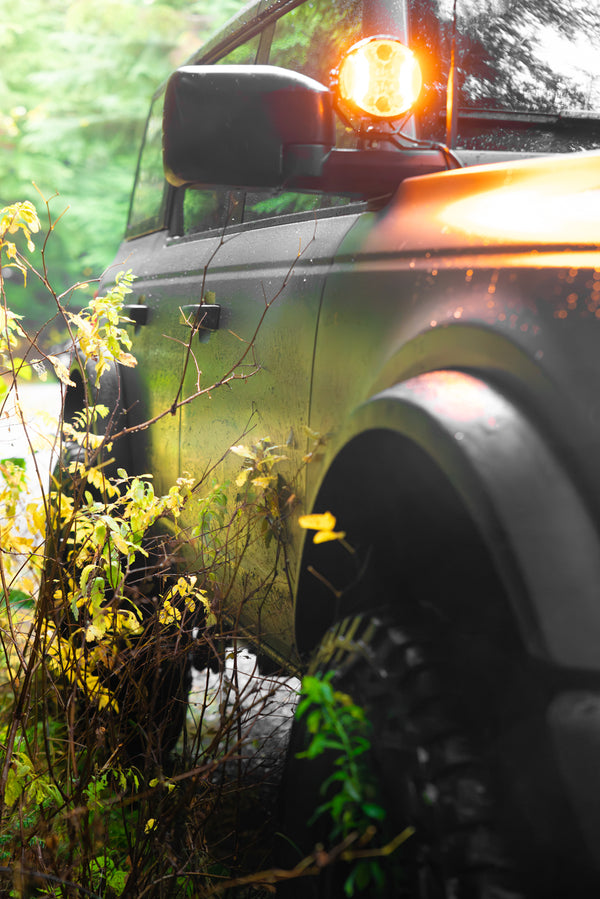
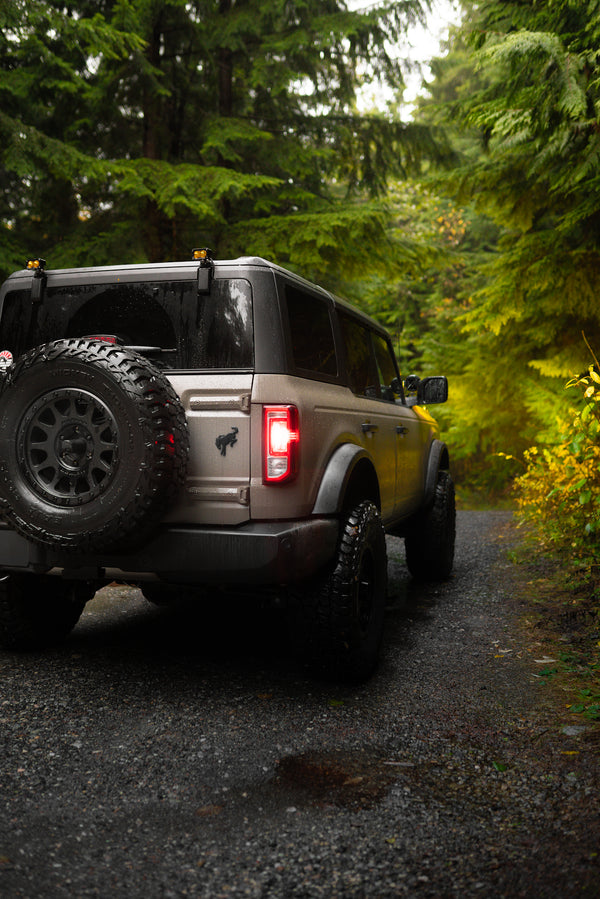
I've never had the film tear. You can mark it in some cases, and most of those marks heal on their own, but going right through it takes a lot.
What PPF won't do
- It won't make you scratch-proof. Very tight, heavily overgrown trails can still leave marks in the film that don't heal. But your paint remains untouched underneath.
- It can be damaged. Tearing through is rare, but a sharp enough hit can do it. When that happens, you peel off that panel and put a new one on. The paint underneath is still protected. You can order a single replacement panel: just contact us.
- It won’t remove pinstripes you already have, but it does hide the light ones. The film sits over the paint and makes minor existing scratches much harder to see. Deeper pinstripes will still show through, so if your rig is badly marked, get paint correction done first, then wrap it. Samples are also a great way to tell if it would hide your existing ones.
- Ceramic coating alone won't stop pinstriping. Owners on Bronco, Tacoma and Jeep forums say the same thing again and again: a coating makes washing easier but does little against branches. More on that in our upcoming post on PPF vs ceramic coating.
PPF vs the other options
| Option | Stops pinstriping? | Effort | Good to know |
|---|---|---|---|
| PPF | Yes, takes the scratch and light marks heal | One install, DIY or shop | Stays on; replace a panel if it gets damaged |
| Ceramic coating | Not really | One application | Makes washing easier; fine on top of PPF after about a week |
| Magnetic trail panels | Where they cover | On and off for every trail | Only protects while it's on plus risk of dirt trapped behind. |
| Doing nothing | No | None | Polish later; some owners wear pinstripes as a badge of honour. |
Which panels to cover first
On any rig that goes off-road, the sides take the most abuse. Brush pinstripes the full length of the vehicle, from the front fenders back to the rear quarters. Behind the wheels, rocks thrown by the tires chip the paint, and the film handles that too.
That's why most Wild Wrap kits cover the full sides, including the Ford Bronco 4-door, Jeep Wrangler JL/JLU and Toyota Tacoma 4th gen (Double Cab). The full matte conversion for the 4-door Bronco is the exception: it wraps around the edges and covers about 98% of the painted body, hood and bumper included.
What does the warranty cover?
Our kits come with a 5-year warranty against manufacturing defects such as yellowing or cracking. It doesn't cover trail damage or a bad installation.
Here's why that's fair: the film's job is to take the hit so your paint doesn't. A mark from a branch means the film did its job. We can't control which trail you pick, but we stand behind the film itself.
Caring for the film after a trail
- Wait 1 week after install before the first wash.
- Pressure washing is fine. Keep the nozzle at least a metre from the film, and take a bit of extra care around the edges, just like you would around trim.
- Wax or ceramic coating on top of the film is fine after about a week.
Full washing tips are in our guide on how to care for paint protection film.
DIY kit or installed for you
Every kit is designed and cut in house in West Vancouver, BC. It comes with labeled panels, slip solution concentrate, a professional squeegee, a microfiber cloth, a syringe and a paper install guide. You supply a spray bottle and a heat gun or hair dryer.
Protect your rig before the next trail
Would rather not do it yourself? We also install kits in West Vancouver. Our goal is simple: making PPF affordable for the off-road community.
Wrap it before you whack it!
Read next: How to protect your off-road vehicle from scratches
FAQ
Do light scratches on PPF heal on their own?
Yes. Fine marks in the top layer of self-healing film fade with warmth from the sun or warm water. Deeper gouges won't heal.
Can I pressure wash PPF?
Yes, once the film has had a week to settle. Keep the nozzle at least a metre away and take a bit of extra care around the edges.
What if the film tears?
It's rare, but if it happens, peel off that panel and apply a new one. The paint underneath stays protected, and you can contact us to order a single replacement panel.
Does matte PPF hide marks better than gloss?
Self-healing works the same on matte and gloss, since both are 3M self-healing film. Where matte wins is the odd minor scratch that doesn’t heal: on a matte finish it tends to blend in and hide a bit better than on gloss.
0 Comments