


















PPF vs ceramic coating for off-road rigs: which one actually stops trail rash?
Ceramic coating won't stop pinstriping. PPF will. A ceramic coating is a slick layer only a few microns thick. It helps mud and water rinse off, but it's far too thin to stop a branch. Paint protection film (PPF) is about 190 microns of self-healing urethane that takes the scratch instead of your clear coat. On a trail rig, put PPF where the brush hits, then add ceramic on top if you want easier washing.
- Ceramic coating: easier washing and extra gloss, but no protection from branches or rock chips
- PPF: stops pinstripes and rock chips on the panels it covers, and fine marks self-heal
- Both: wait about a week after the film goes on, then coat it (matte film needs a matte-safe coating)
What does ceramic coating actually do?
Ceramic coating is a liquid you wipe onto the paint. It cures into a hard, glassy layer that bonds to the clear coat. That layer is measured in microns, so it's very thin. Here's what it's good at:
- Water and mud slide off. Coated paint beads water and lets go of dirt, so washing is faster.
- Gloss. It deepens the shine on gloss paint.
- Light chemical and UV protection. Bird droppings, tree sap and road grime come off more easily before they etch the paint.
What it won't do is stop a branch. A coating that thin can't absorb a scratch from brush, a rock chip from the truck ahead or a door ding. Some shops call ceramic "scratch resistant", and on a car that only ever sees a wash mitt, that can be fair. On a trail, it's a different story.
What happened when a ceramic-coated Defender hit the trail?
My buddy Anthony had his classic Land Rover Defender 110 ceramic coated. He was told it would protect the truck against scratches and branches. After one day on the trail, with brushy forest sections, and an unexpected overgrown trail, water crossings and a run along the beach, the truck was full of pinstripes. The coating didn't stop a single one.
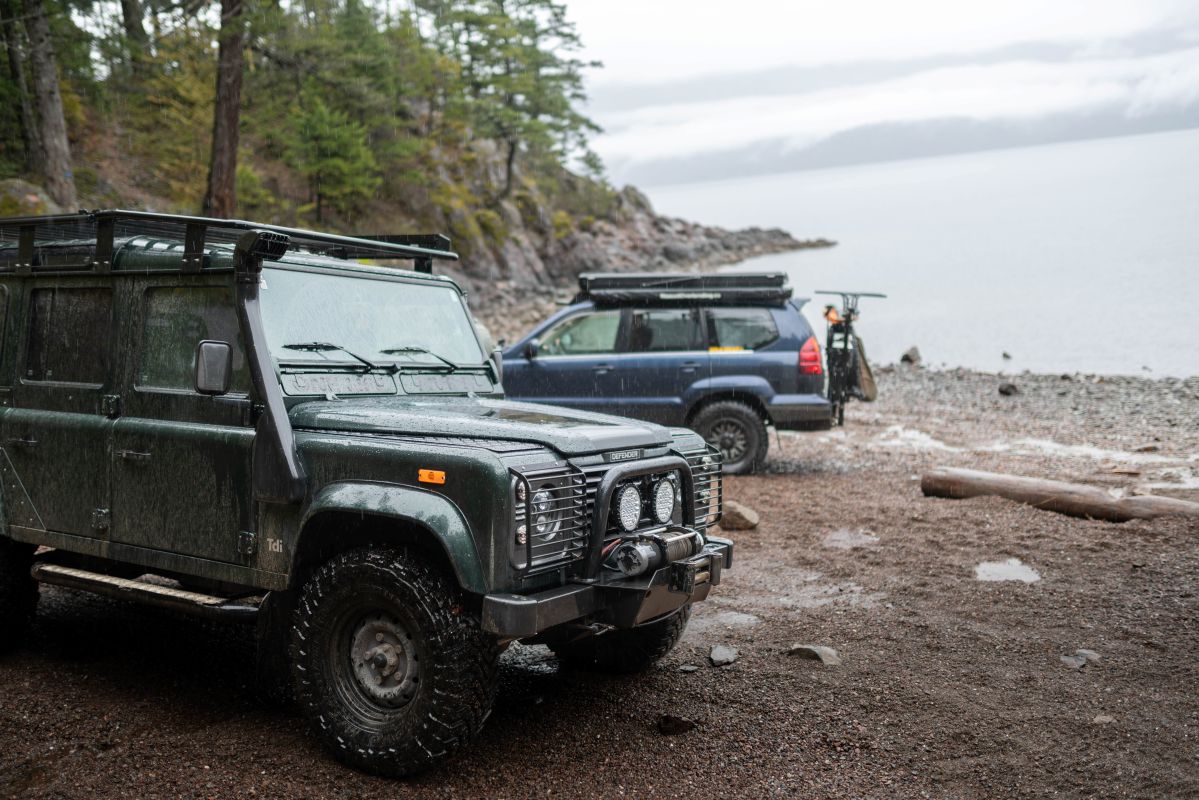
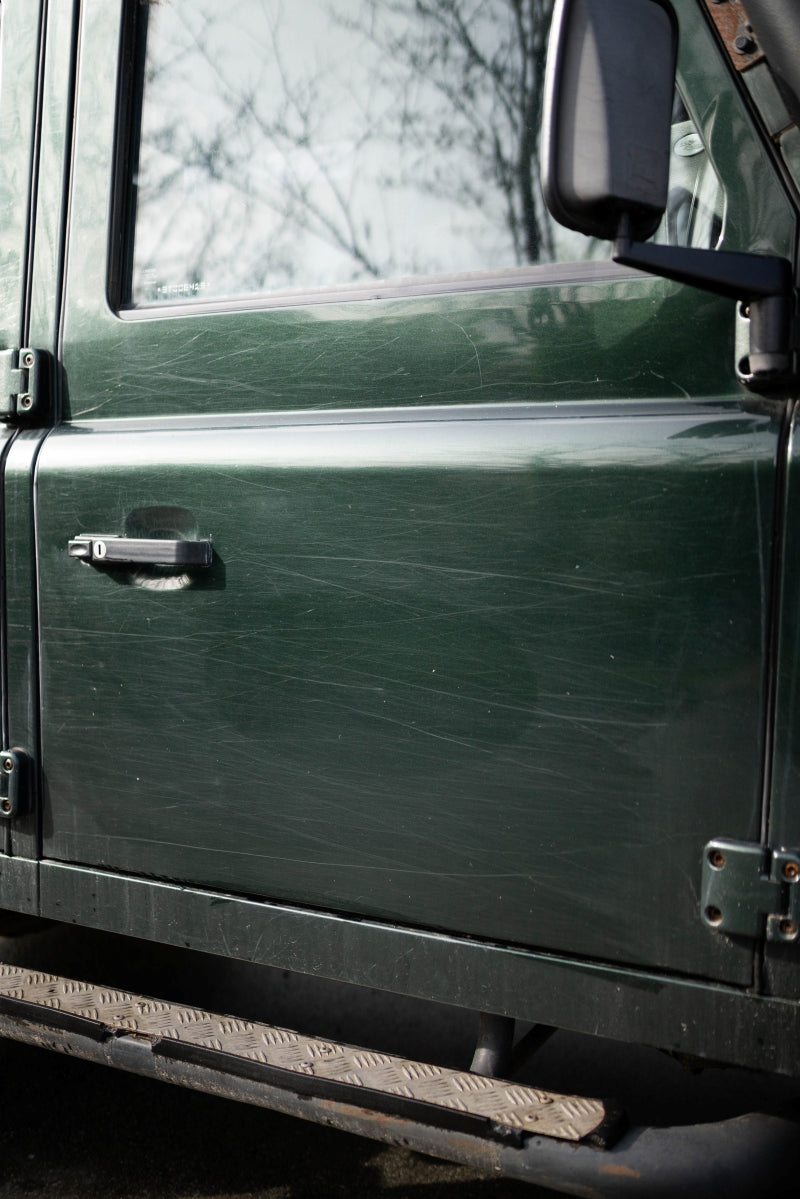
That isn't a bad coating or a bad installer. Ceramic just isn't built for that job. Off-road forums say the same thing over and over: ceramic coating does little or nothing against pinstriping.
Can PPF hide pinstripes that are already there?
For light ones, yes. We put a section of film over the pinstripes on Anthony's quarter panel. The two photos below show the same spot before and after. Under the film the scratches are hidden, while the paint around it, which isn't covered yet, still shows every line.
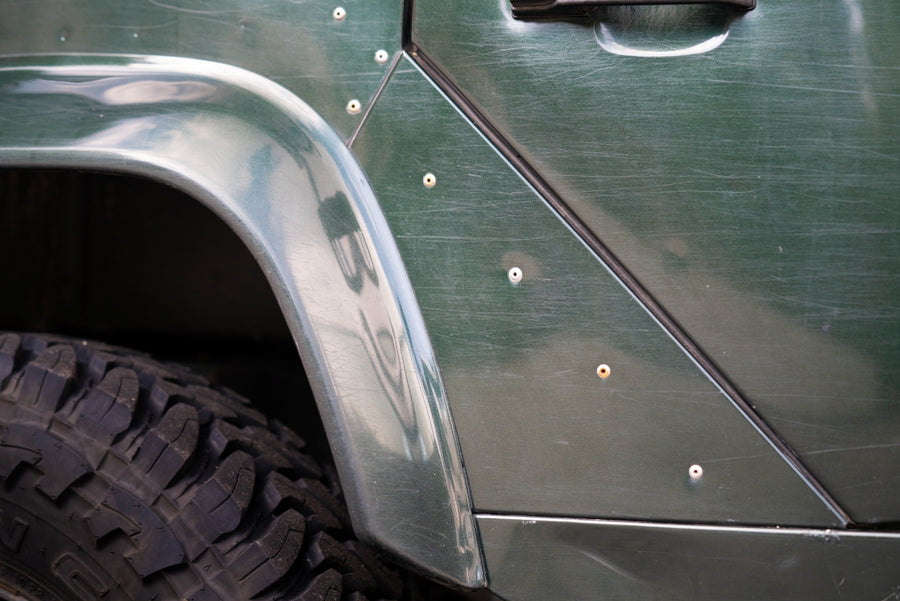
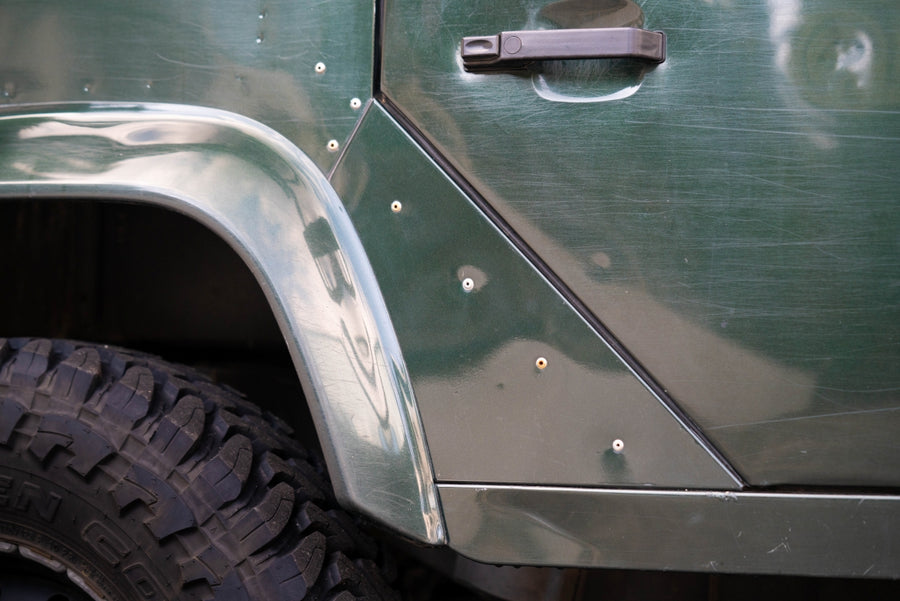
Film doesn't remove scratches. It hides them, and it works best on fine ones. If your rig is already badly marked, we can do paint correction before the film goes on.
What does PPF do that ceramic can't?
Paint protection film is a clear (or matte) urethane film that sticks to your paint. The 3M film we use is about 7.5 mil thick in gloss and about 7.9 mil in matte. That's roughly 190 to 200 microns, many times thicker than a 2 microns ceramic coating.
That thickness is the whole point. When a branch drags across the door, the film takes the scratch instead of your clear coat. Fine marks are self-healing: they fade with sun or warm water. When we ran our Lexus GX470 down an overgrown local trail, with branches dragging mud across the film, no marks showed after a wash. Film also stops rock chips on the panels it covers, which matters on gravel forest service roads.
PPF vs ceramic coating: side by side
| Question | PPF | Ceramic coating |
|---|---|---|
| Stops pinstriping from brush | Yes, the film takes the scratch | No |
| Stops rock chips | Yes, on the panels it covers | No |
| Hides light scratches already there | Yes, fine ones | No, it locks in what's underneath |
| Self-healing | Yes, fine marks fade with sun or warm water | No |
| Makes washing easier | Yes, Hydrophobic, mud and water slide off | Yes, mud and water slide off |
| Look | nearly invisible, Adds gloss and slickness | Adds gloss and slickness (matte versions exist) |
| Thickness | About 190 microns (7.5 mil gloss, 7.9 mil matte) | A few microns (1-2) |
| DIY? | Yes, with a pre-cut kit | Yes, but plan a full weekend for prep and cure time |
| Typical cost | About $1,500 to $1,750 CAD for a Wild Wrap full sides kit | About $50 to $250 for a DIY kit plus supplies; about $800 to $2,500 at a shop in Canada, often over $3,000 on a big SUV or truck |
| Warranty or lifespan | 5-year warranty against manufacturing defects | Roughly 1 to 3 years DIY, 3 to 7+ years from a pro |
Ceramic prices are rough 2026 ranges from Canadian and US detailing price guides. Your quote depends on the vehicle's size and how much paint correction it needs first. Our kit prices are from wildwrap.ca in November 2026.
Is ceramic coating hard to do yourself?
Applying it isn't hard. The prep is. The paint has to be washed, decontaminated with iron remover and clay, and usually polished first, because ceramic locks in whatever is underneath, swirls included. The coating kit itself is cheap, about $40 to $250, but with iron remover, clay, pads and towels you're closer to $115 to $385, and more if you need a polisher. Plan a full weekend with cure time, and watch for high spots (streaks of coating that weren't wiped off in time). A shop charges more because most of what you pay for is that prep and paint correction.
Is PPF hard to do yourself?
With a pre-cut kit, no. Every Wild Wrap kit is designed and cut in house in West Vancouver, BC. Each kit comes with:
- Slip solution concentrate
- A professional squeegee
- A microfiber cloth and a syringe
- An install guide
You supply a spray bottle and a heat gun or hair dryer. If you'd rather not do it yourself, we also install kits in West Vancouver or near Vancouver's lower mainland.
Should you get both?
For a lot of off-roaders, yes. They do different jobs and work well together:
- PPF first on the panels brush hits: doors, fenders and quarter panels. Most of our kits cover the full sides of the vehicle.
- Wait about a week after the film goes on. That's also how long to wait before the first wash.
- Ceramic on top if you want mud to rinse off easier. You can coat the film and any uncovered paint.
Matte film? Use a ceramic coating made for matte finishes. Regular coatings and waxes can leave shiny patches on matte film.
If your budget only stretches to one and you drive brushy trails, pick PPF. Ceramic makes cleaning easier, but only film keeps branches off your paint.

What won't PPF do?
- It isn't armour. Tight, heavily overgrown trails can still mark the film, and a hard enough hit can mar it but your paint remains untouched. When that happens, you replace one panel of film instead of repainting a door. Single replacement panels are available: contact us for a price.
- It hides light scratches, but it doesn't erase damage. For a rig that's already badly marked, paint correction before the film gives the cleanest result.
Warranty: our 5-year warranty covers manufacturing defects such as yellowing or cracking. It doesn't cover trail damage or a bad installation. When film gets marked on the trail, it did its job. For more on this, read Does PPF stop pinstriping off-road? An honest answer.
Protect your rig before the next trail
Pre-cut DIY PPF kits for the Bronco, Jeep Wrangler, 4Runner, Tacoma, Land Cruiser, Defender and more, including a full sides kit for the classic Land Rover Defender 110. Prefer not to DIY? We install them in West Vancouver. Our goal is simple: affordable PPF for the off-road community.
Wrap it before you whack it!
Read next: How to protect your off-road vehicle from scratches
FAQ
Does ceramic coating stop pinstriping?
No. Ceramic coating is only a few microns thick, far too thin to absorb a scratch from branches. For pinstripe protection you need PPF.
Can I put ceramic coating on top of PPF?
Yes. Wait about a week after the film is installed, then coat it. It makes mud and dirt rinse off easier.
Can PPF go over existing pinstripes?
Yes. Film hides light pinstripes well, as you can see on Anthony's Defender above. It doesn't remove them, so for deep scratches, paint correction before the film gives the best result.
Can I use a regular ceramic coating on matte PPF?
Use one made for matte finishes. Regular coatings and waxes can leave shiny patches on matte film.
Can I pressure wash PPF or a coated rig?
Yes. Keep the nozzle at least a metre from the film and take extra care around the edges. See our PPF care guide.
0 Comments